Another Vessel Goes Down
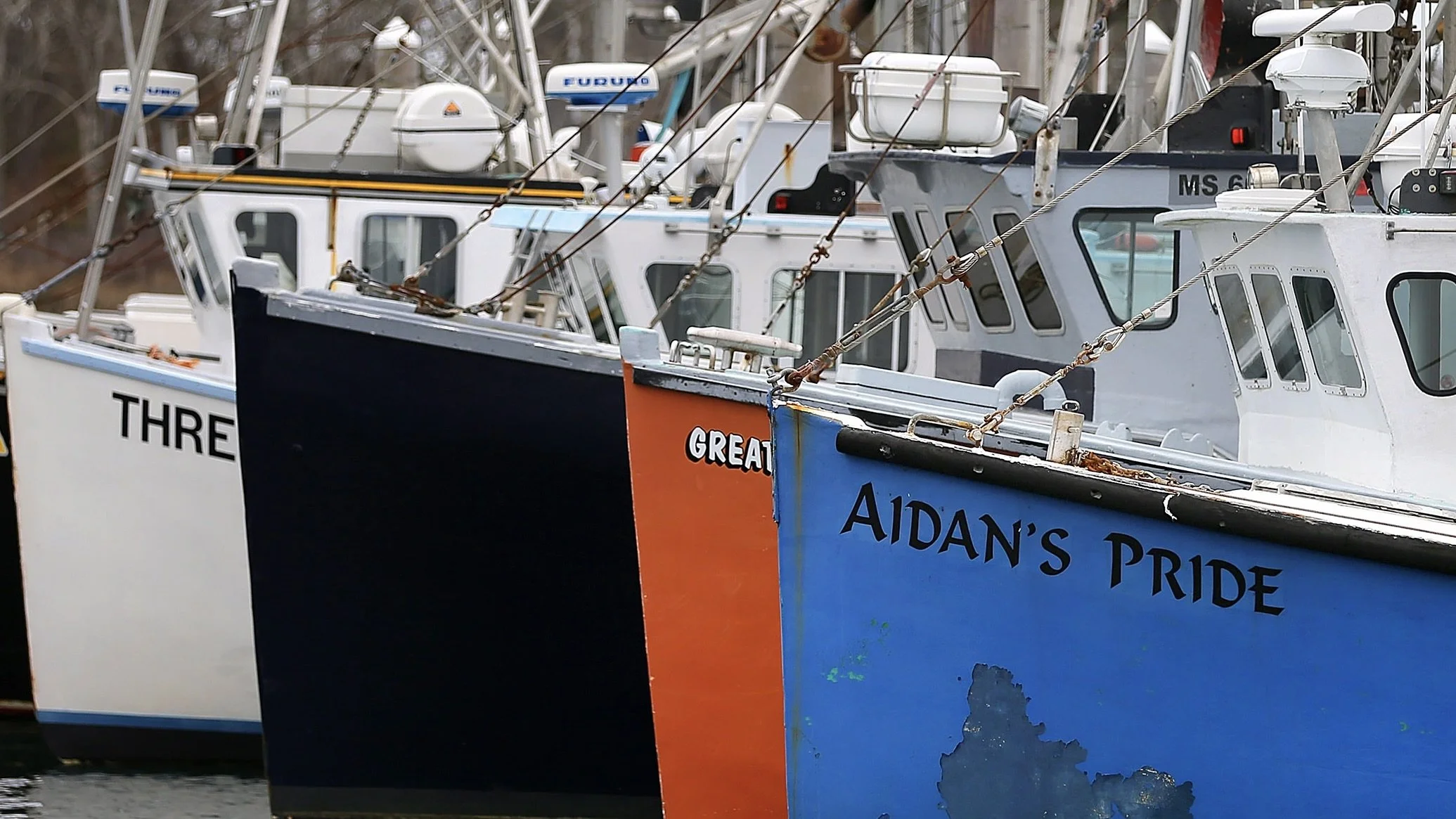
Fishing vessels at port in Massachusetts.
A fishing vessel went under in winter water.
At about 6:50 a.m. on January 30, 2026, the U.S. Coast Guard received an emergency alert registered to the 72-foot commercial fishing vessel Lily Jean, roughly 25 miles off Cape Ann. Watchstanders couldn’t reach the boat. Search crews launched, and in the search area they found what the sea leaves behind when it takes the rest: a debris field, a life raft that was unoccupied, and one person recovered from the water, unresponsive.
As the hours moved forward, the outline sharpened in the way these stories always do — not by becoming clear, but by becoming real. Seven people were believed to have been aboard. There was no mayday call. And the National Oceanic and Atmospheric Administration (NOAA) has confirmed that among those seven was a fisheries observer.
Those are the facts as they arrived: brief, precise, and incomplete. They sit on the page like updates until you pause on the phrase “seven people were aboard” and realize what that sentence actually conveys.
They’re not statistics. They’re lives with weight.
Seven individuals who left the dock expecting the ordinary ending: the line coiled back down, the gear rinsed, the tired walk across the ramp at the end of the trip. Seven sets of hands that knew their work. Seven bodies that had learned cold steel and long hours as routine. And seven private worlds off the water — families, partners, kids, parents, friends — each holding a version of that person that nobody else holds in quite the same way.
In the first hours after a boat goes missing, those worlds don’t shrink. They expand. A phrase like “believed to have been aboard” becomes a web of remembered details: the last ordinary goodbye at the door, the last joke, the last small promise made casually because it was supposed to be kept.
People on shore often picture “a fisherman” as a single figure against the sea. Offshore, the truth is less romantic and more human: it’s a crew, a system, a life people choose not because it’s comfortable but because it fits—because the work, for all its cost, matters. Out there, everything depends on interlocked attention, on reading one another and the boat at the same time. Decisions don’t wait. Gear doesn’t forgive. Weather doesn’t negotiate. Fatigue isn’t private.
That’s part of why news like this lands so heavily in working ports. It isn’t received as “an incident.” It’s received as a tear in a daily expectation: boats go out and boats come back, and the people on them — however cold, however tired — step onto the dock again.
The mention of a fisheries observer belongs inside that same picture. Observers are trained professionals collecting at-sea data because the fishery can’t be understood only from shore. It’s a different job than hauling gear or standing watch, but it shares the same constraints: long hours, close quarters, weather you don’t get to vote on, and the hard fact that when you’re offshore, your life is tied to the vessel in a way that erases any comfortable distance.
“Debris field” turns a working world into fragments. “Unoccupied life raft” turns hope into an object. The words are short. What they contain isn’t.
And then there’s the line people read twice: “no mayday call.” Not because it explains what happened — it doesn’t — but because it hints at how little time there may have been to explain anything at all. It’s the kind of detail that makes the mind sprint ahead of what’s known. Better to let it stand as it is: a hard edge on a hard morning.
What doesn’t require imagination is the human scale.
Seven people were aboard.
That means someone’s voice missing from a kitchen. Someone’s boots by a door that suddenly feel too permanent. Someone with plans for later that day that will never appear in any official timeline. Someone whose family can picture, with painful clarity, the ordinary last moment: a goodbye said quickly, a hand lifted, a door shutting, the day beginning like any other workday.
It’s easy to forget — until a story like this forces attention — that the sea-to-table chain begins in places most people never see. Seafood can look simple on ice. Offshore it isn’t. Offshore it’s labor and timing and repetition. It’s skill built from seasons of getting it right. It’s a floating workplace where the environment is always part of the job description. And it’s interdependence: one person’s steadiness supports another person’s safety; one person’s mistake can narrow the whole boat’s margin.
That interdependence is why people who work around fishing talk about “the crew” as a single thing. Not because individual lives blur together, but because the work requires a shared vigilance — small checks, constant adjustments, wordless coordination in tight spaces. Most trips, that competence is invisible to everyone not on board. It becomes visible only when the expected ending doesn’t arrive.
In Gloucester and other working ports along the Massachusetts shore, the distance between dock and home is short in every sense. People know one another. Boat names are stitched into local life. A vessel isn’t just an asset; it’s part of the harbor’s daily fabric, part of how a place understands itself. When a boat doesn’t come back, the story doesn’t stay on the water. It moves immediately into kitchens, into friendships, into phone trees, into the way a whole community holds time differently while waiting for updates.
There is no clean way to write about that waiting. It looks ordinary — people going to work, making dinner, driving kids — and it isn’t. The day stretches thin. Attention keeps snapping back to the same fixed point: out there.
The public facts may change as the recovery and investigation proceed. But the core of the story doesn’t depend on future updates. The core is already here:
A working boat with seven working people aboard did not come home as expected.
Each person aboard was part of the operation that brings seafood ashore. Each person aboard was also, unmistakably, a person — fully particular, fully loved, fully held by someone off the water.
A fishing boat went under in winter water.
And what lingers isn’t a number. It’s the subtraction on shore: seven lives gone missing, and families learning the weight of the word.
Update: The seven crew members have been identified as Captain Accursio “Gus” Sanfilippo, Paul Beal Sr., Paul Beal Jr., John Paul Rousanidis, Freeman Short, Sean Therrien, and Jada Samitt. My thoughts are with their families, friends, and colleagues.