The Science of Art: Observation, Restoration, and Change
Cape Cod’s coastal systems are always telling us something.
A stream running lower than expected. River herring arriving later than they have in years past. Fish holding below a barrier instead of moving upstream. A shell worn smooth by time, tide, and sand. A familiar pattern shifting just enough to make you stop and look again.
The question is whether we are paying close enough attention to notice.
For me, drawing is one way of paying attention. It is not just about making an image. It is about slowing down long enough to see what is actually there.
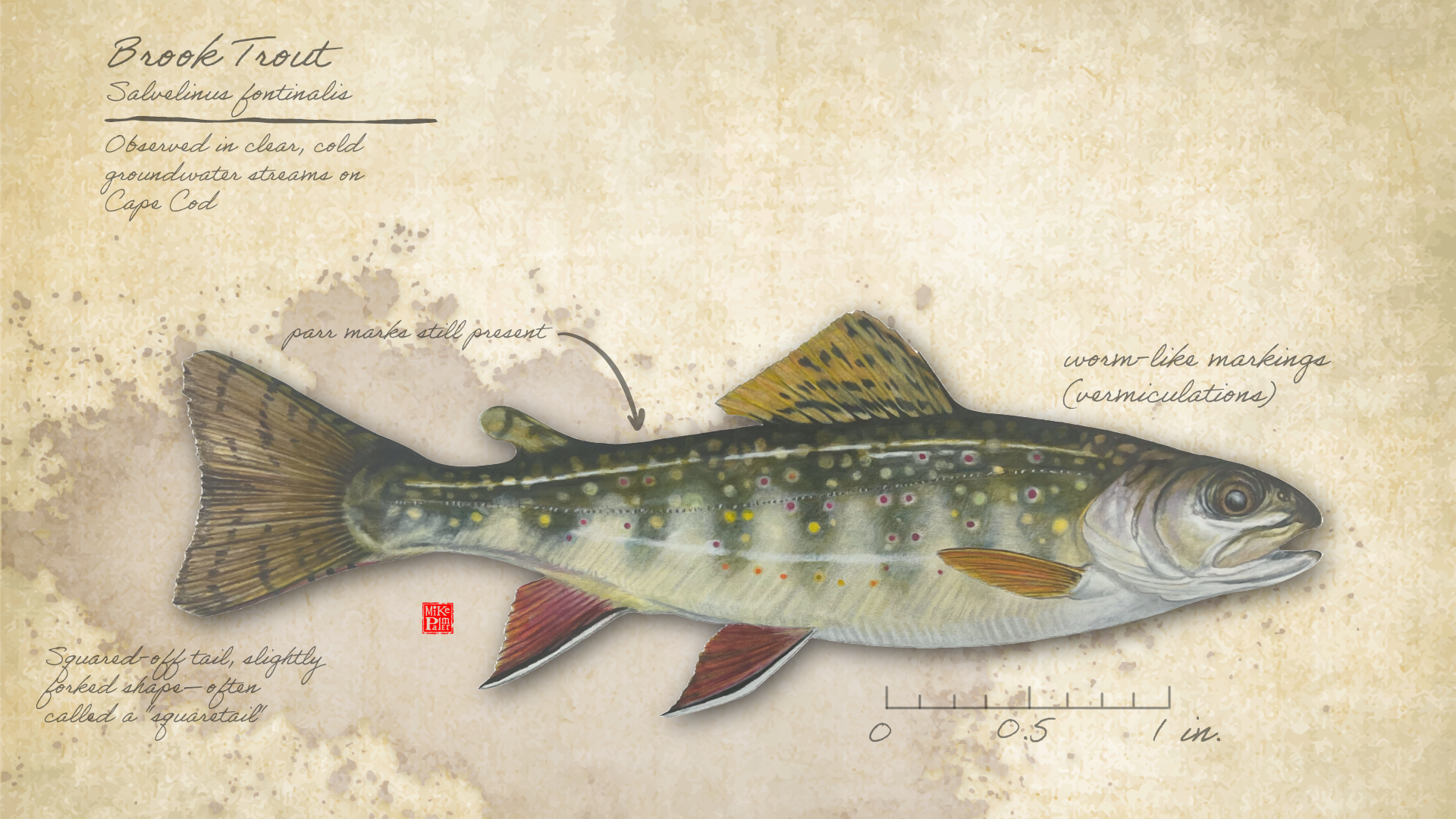
A fish or a shell may seem familiar at first. A trout is a trout. A quahog shell is a quahog shell. But the longer I look, the more that simple outline gives way to something more specific: the parr marks on a young brook trout, the worn edge of a shell, the slight variation in shape, color, or pattern that was easy to miss at first.
Not just a trout, but this trout.
Not just a shell, but this shell, with its own wear, markings, and history.
That shift matters. Drawing turns the familiar into something particular. It asks for patience. It asks you to look again. And often, the second or third look is where the real information begins.
The same is true in restoration and monitoring.
Important signals in the natural world are often subtle. River herring are a good example. Change may show up as a delay in run timing, a shift in water level, fish gathering below a barrier, or a run behaving differently than it did the year before. Those signals are easy to miss if we only look at the final number. But often, the small changes are where the story begins.
Careful observation helps us see change sooner.
Whether we are watching a river after rain, tracking water temperature, assessing fish passage, or noticing how a restored habitat responds over time, the details matter. They help reveal not only what a system looks like now, but what it has been through and what it may need next.
Art and science are often treated as separate worlds, but they begin in much the same place. Both depend on attention. Both require us to slow down, look past the obvious outline, and stay with something long enough for it to become more complicated.
A fish in the hand. A river running low. A line of herring stalled below a ladder. A shell shaped by years in moving water.
At first, we see the obvious thing. Then, if we keep looking, we begin to see the story.
On Cape Cod, that kind of attention matters. Fisheries, coastal habitats, tourism, and community life are all tied to the health of the waters around us. The blue economy depends not only on the resources themselves, but on our ability to recognize when those systems are changing.
That is the value of close observation. It helps us catch the small shifts before they become obvious problems. It gives us a better chance to understand what is happening, and a better chance to respond while there is still time.
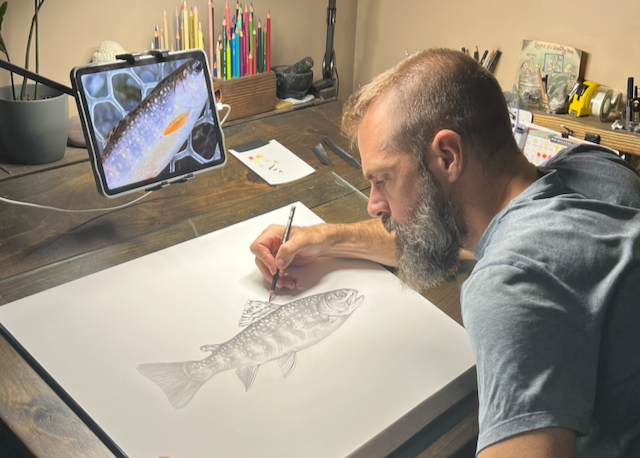
The author in the studio, adding details to a brook trout drawing.