Art. Life. Place. - A Blog

Getting to Good Enough
Perfectionism promises us success, happiness, and fulfillment. But it’s a liar. Perfectionism is a trap that will ultimately lead to failure and disappointment. It prevents us from taking risks, exploring our full potential, and enjoying the journey. Embracing the principle of ‘getting to good enough’ we let go of perfectionism and open ourselves up to a more authentic and fulfilling life. We learn to appreciate the beauty in the ordinary and to find joy in the journey, even when it’s not perfect. We accept our imperfections, celebrate our progress, and move on to the next challenge. The imperfections in our work are what make it interesting. They're the tales that tell us about ourselves and our journey. Each piece of original art tells us a story - an imperfect one about the artist, their art, and what happened during its creation.
On Gratitude
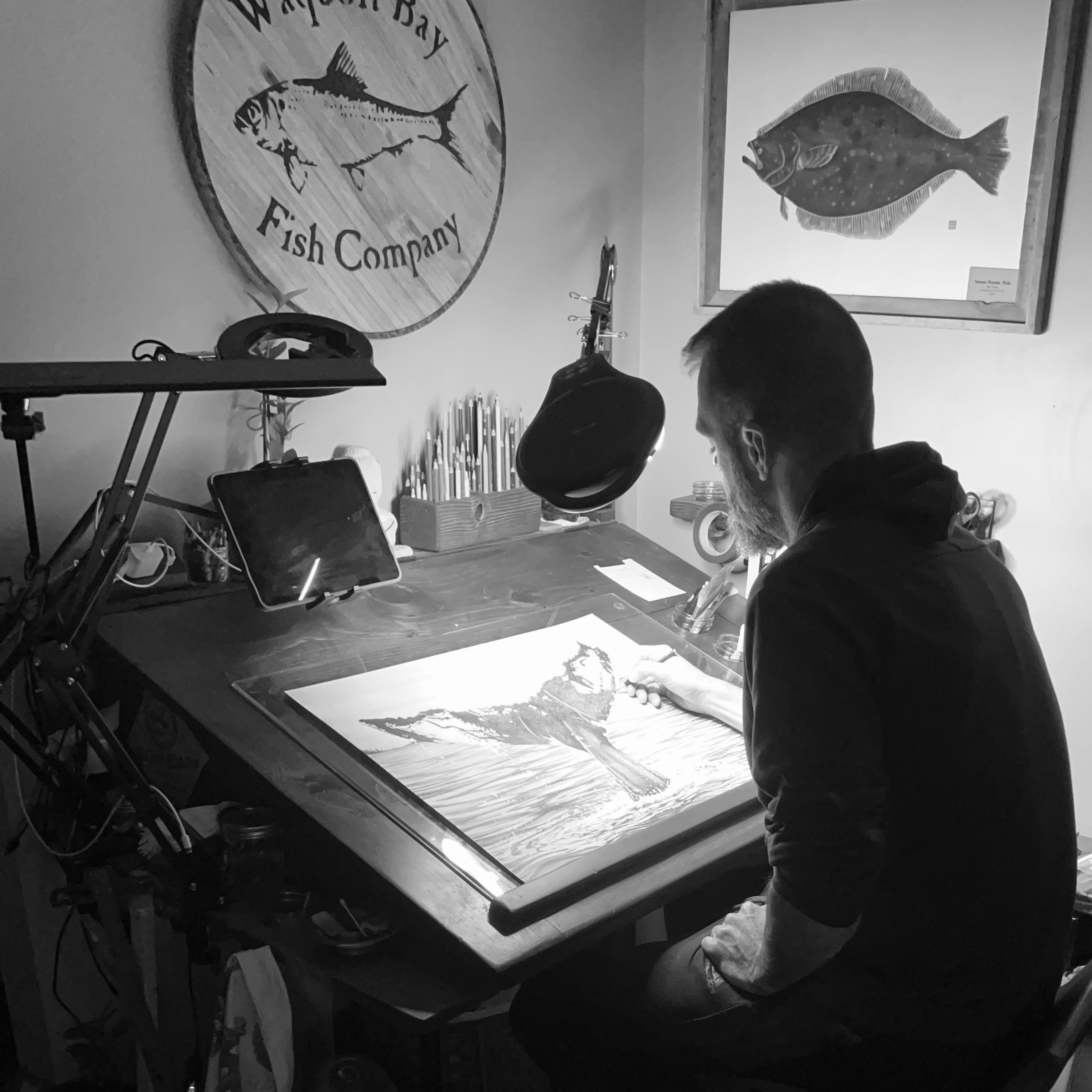
As an artist with a young family, I get a lot of work done in the early morning hours when the house is quiet. I long for the solitude and focus that these moments provide. The solitude, however, can sometimes be overwhelming, especially during the winter months when I have less in-person interaction with customers and followers. Solitude can be the breeding ground of doubt. In these moments, I find myself feeling grateful for the people who support me, including my family, friends, fans, other artists, and the larger creative support network. I appreciate all the people who play a role in supporting my art, and I recognize that you are an integral part of my creative process. Thank you.
Original Fish Prints
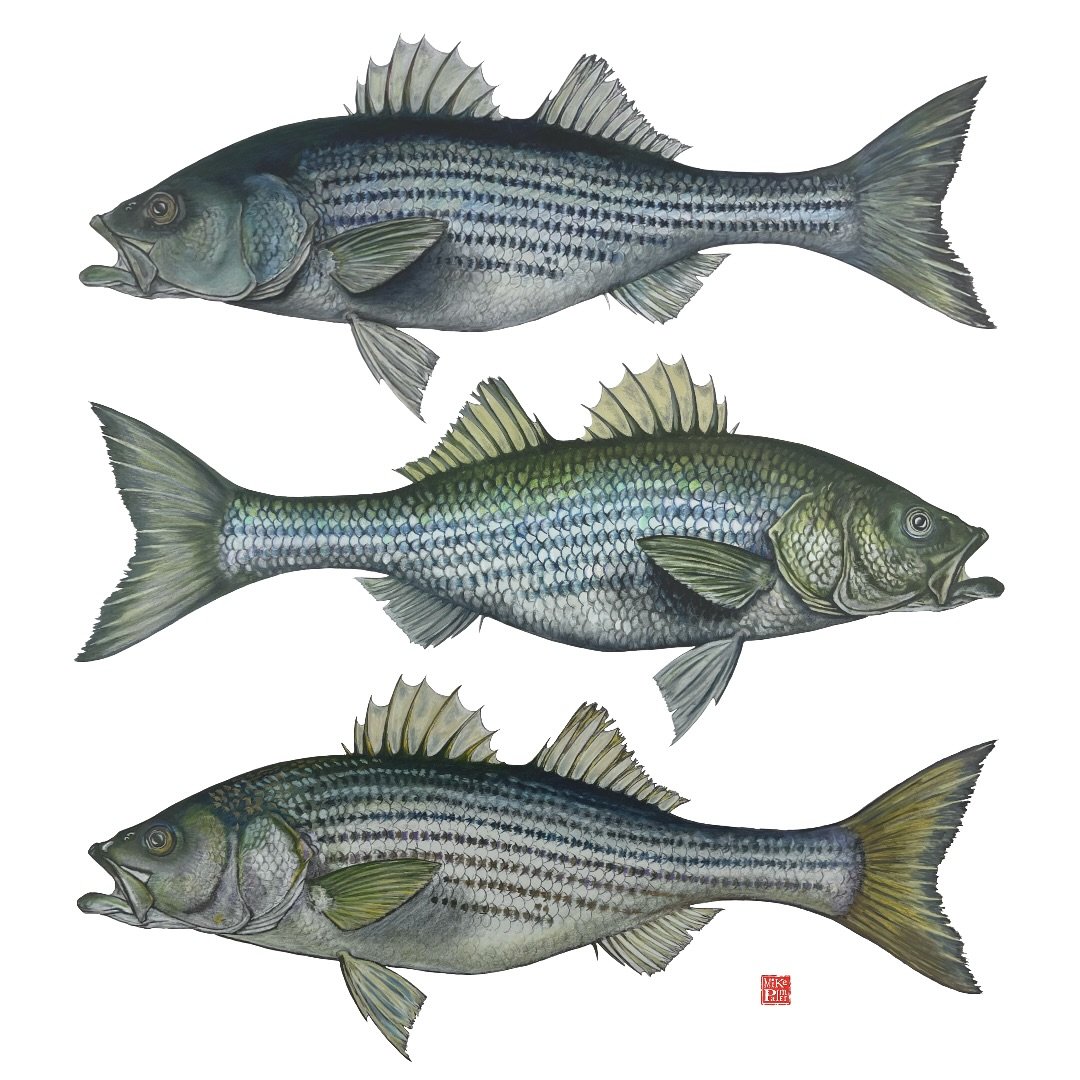
In this blog post I pull back the curtains on my fish print drawing process and describe the two-stage drawing process in depth. The first stage of the process is the grey-scale drawing, where I make reference sketches and a final graphite drawing of the fish. Once the grey-scale drawing is complete, I produce a giclee print of the grey-scale drawing on hemp paper. In the second stage I hand color each print with colored pencils bringing the fish alive with vibrant colors. Each colored-pencil fish print is an original piece of unique art.

Devil’s Purse
Mixed in among the seaweed, eel grass, and bits of crustacean strewn among the wrack line, one can often find black leathery pouches known as a “devil’s purse”. These pouches have a distinctive flattened, rectangular shape with tendrils or horns at the corners, resembling purse strings or devil's horns, hence the name. These odd pouches are actually egg cases produced by a type of fish called skate. Among the most common egg cases found along Cape Cod beaches are those of the clearnose and little skates. While the terms "devil's purse" may not have scientific significance, it provides a way for people to describe and engage with the natural world, linking folklore and natural history.

The Fish Called Grampus
Today the whale species referred to as the grampus is the Risso’s dolphin of the genus, Grampus. Grampus can also refer to various other small black cetaceans like the killer whale or the pilot whale. Of the pilot whales, there are two species - the long-finned (Globicephala melas) and the short-finned (Globicephala macrorhynchus). At-sea they are difficult to distinguish from one another. That said, the colonial and native New Englanders that relied on them for food and oil didn’t bother themselves with such details. Hell, they didn’t bother differentiating fish from whales, though they did spend considerable effort locating, capturing, and harvesting the animal they called grampus, or the blackfish. On Cape Cod, blackfish was an important resource for the native Wampanoag and later the colonial New Englanders that inhabited this land. So important, that both the Pilgrims and Thoreau wrote about it.